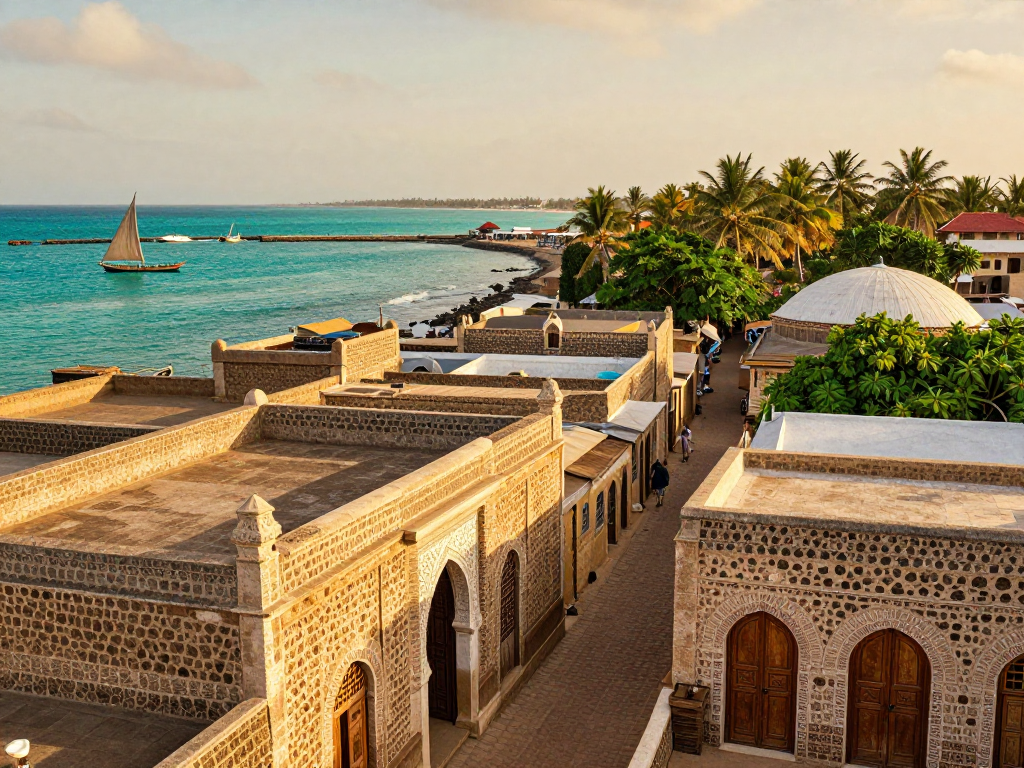

The Carved Doors of Lamu
If Lamu has a signature art form, it is carved into wood and set into coral stone. The island's monumental doors — heavy, ornate, and deeply symbolic — are among the finest examples of Swahili decorative craftsmanship anywhere on the East African coast. Each door is a palimpsest of cultural influence: geometric Islamic patterns intertwine with Indian lotus motifs and African symbolic carvings, reflecting the centuries of maritime trade that shaped this archipelago. Traditionally, the door was the first element commissioned when building a new house, its elaborateness signaling the owner's status and piety.
The craft has been practiced by master fundis (artisans) for generations, passed down through apprenticeship in workshops that smell of mangrove wood and linseed oil. Today, Lamu's doors are recognized as masterworks of living heritage — protected, photographed, and studied, yet still very much in daily use, swinging open each morning to let the Indian Ocean breeze pour through homes that have stood for centuries.
