A Day In Salvador
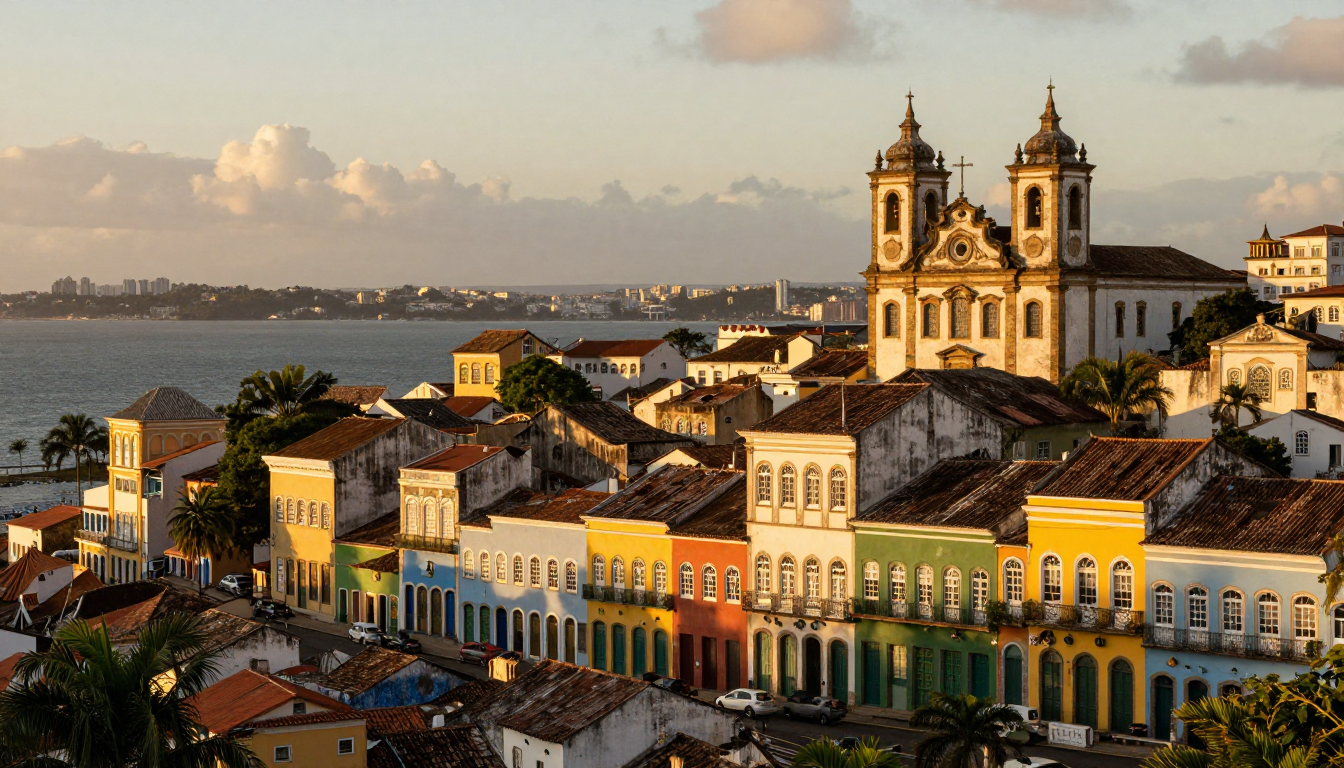
There are cities you visit, and then there are cities that claim you—Salvador de Bahia belongs firmly to the latter category. Brazil's first capital, founded in 1549 on a dramatic escarpment overlooking the Bay of All Saints, is a place where the Atlantic crashes against one shore while the bay laps gently at the other, and between them rises a tumble of baroque churches, candy-colored colonial façades, and cobblestone streets that have witnessed nearly five centuries of history. The UNESCO-listed Pelourinho district, with its cascading terracotta rooftops and gilded altars, is the beating heart of a city that refuses to sit still.
But Salvador's true magnetism lies in its living culture—the deepest expression of Afro-Brazilian identity in the Americas. Here, the rhythms of Olodum thunder through the streets during Carnival (the largest street party on Earth, per Guinness), Candomblé ceremonies honor Yoruba orishas in centuries-old terreiros, and capoeira circles form spontaneously on sun-warmed plazas. The cuisine, the music, the spiritual life—everything pulses with an energy that is at once ancient and electric, African and Atlantic, sacred and joyful.
To walk Salvador is to understand that a city can be simultaneously a museum and a dance floor, a cathedral and a drum circle. The Lacerda Elevator whisks you between the Upper and Lower Towns in seconds, but the real vertigo comes from the sheer density of beauty, flavor, and sound packed into every corner of this extraordinary place.
Photographs of Bahia
Pierre Verger
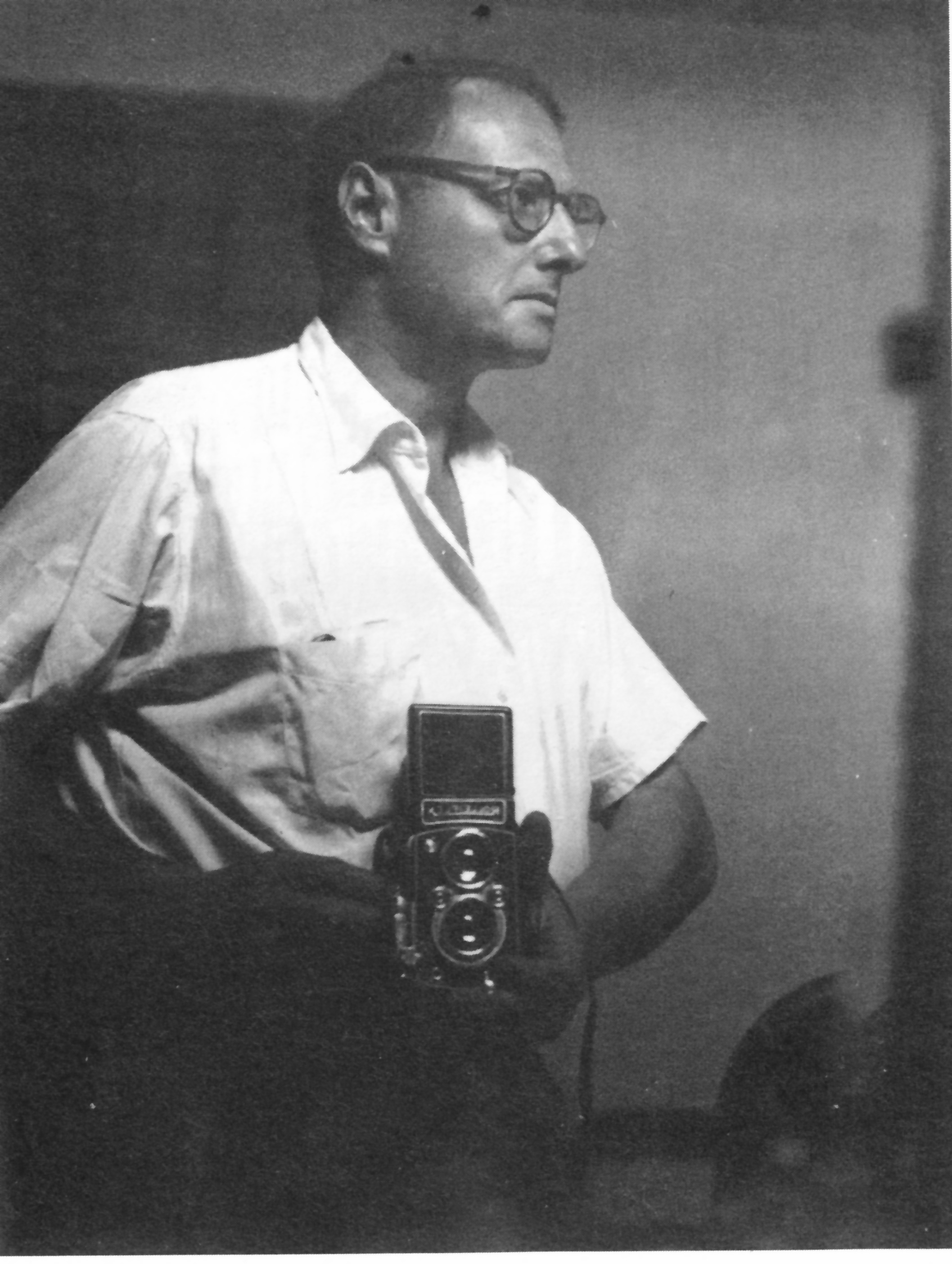
No artist is more synonymous with Salvador than Pierre Verger, the French photographer who arrived in Bahia in 1946, fell hopelessly in love with the city, and never left. Over five decades, Verger created an extraordinary visual archive of Afro-Brazilian life—Candomblé rituals, market women balancing trays of acarajé, capoeira masters mid-flight, children playing in Pelourinho's alleys—capturing the sacred and the quotidian with equal tenderness.
Verger's work transcended photography; he became a babalawo (Yoruba priest of Ifá), took the name Fatumbi, and devoted his life to documenting the cultural bridges between West Africa and Bahia. His images, now housed in the Pierre Verger Foundation in Salvador, remain the definitive visual record of a city's soul—proof that Salvador's beauty is not in its architecture alone, but in the faces and gestures of its people.
Acarajé
If Salvador has a single iconic dish, it is acarajé—golden, crisp-shelled fritters of black-eyed peas, split open and stuffed with vatapá (a creamy paste of shrimp, cashews, and dendê palm oil) and caruru (an okra-and-shrimp stew). The dish traces its origins directly to the Yoruba akara of West Africa, carried across the Atlantic by enslaved people and transformed in Bahia into something entirely its own. It is street food elevated to cultural patrimony, recognized by Brazil's national heritage institute as an intangible treasure.
The baianas de acarajé—women in flowing white lace dresses and turbans—are as much a part of Salvador's landscape as the church spires. They set up their wok-like pans on street corners at dusk, and the scent of dendê oil and frying batter becomes the city's evening perfume. To eat acarajé in Salvador is to taste the Afro-Brazilian diaspora in a single, glorious bite.