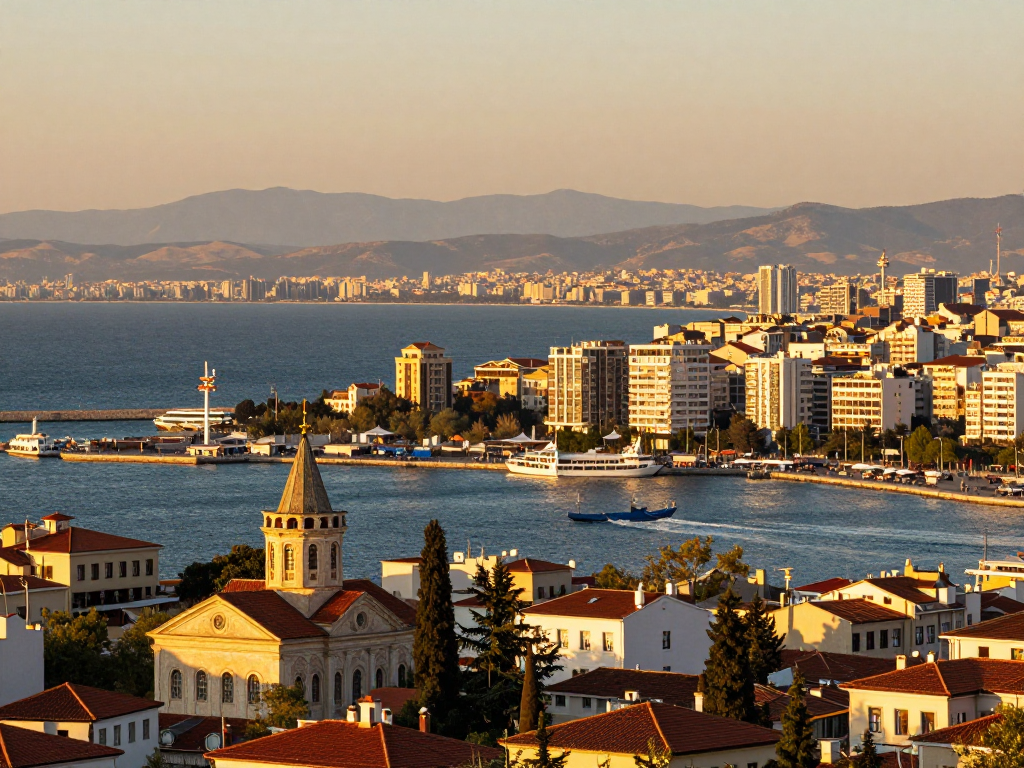
A Day In Thessaloniki
There is a particular quality to the light in Thessaloniki — something honeyed and ancient that softens the edges of Byzantine domes and gilds the promenade along the Thermaic Gulf. Greece's co-capital, as locals proudly call it, is a city that wears its twenty-three centuries with an effortless grace that Athens, for all its grandeur, sometimes struggles to match. Founded in 315 BC by Cassander of Macedon and named for his wife — Alexander the Great's half-sister — Thessaloniki has been a Roman crossroads, a Byzantine jewel second only to Constantinople, an Ottoman port where churches, mosques, and synagogues stood shoulder to shoulder, and, for four centuries, the only Jewish-majority city in Europe.
Today the city hums with the energy of a million inhabitants who understand that the good life is not something you pursue but something you practice daily. The waterfront stretches for five unbroken kilometres, from the iconic White Tower — once a prison, now the city's most photographed landmark — past Aristotle Square's sweeping arcades to the concert halls and galleries that earned Thessaloniki its reputation as Greece's cultural capital. Wander into the Ano Poli quarter above, where Ottoman-era houses lean over cobbled lanes and the Heptapyrgion fortress commands views that stretch to Mount Olympus on clear days. The evening volta — the ritual promenade — fills the seafront with families, students from the Balkans' largest university, and couples sharing bougatsa from corner bakeries. It is a city that rewards those who slow down, who linger over a Greek coffee as the sun sinks into the gulf and the city lights begin to shimmer like a strand of amber beads.

Transfiguration of Christ Mosaic
Unknown Byzantine Masters
Inside the fourteenth-century Church of the Holy Apostles, one of fifteen UNESCO World Heritage monuments in Thessaloniki, a luminous mosaic cycle survives that art historians consider among the finest achievements of the late Byzantine Palaeologan Renaissance. The Transfiguration of Christ, rendered in thousands of gold and glass tesserae between 1310 and 1314, depicts the divine radiance atop Mount Tabor with a dynamism and emotional depth that would not appear in Western European art for another century. The figures seem to move — the apostles recoil, their drapery billowing — while Christ stands bathed in a mandorla of unearthly white light against a shimmering gold ground.
These mosaics represent a critical bridge between the hieratic traditions of middle Byzantine art and the more naturalistic impulses that would later flourish in the Italian Renaissance. The Church of the Holy Apostles itself, with its elegant cross-in-square plan, elaborate brickwork patterns, and ceramic ornament, stands as a masterclass in late Byzantine architecture — a testament to Thessaloniki's role as the empire's artistic and spiritual second city.
Bougatsa
If Thessaloniki has an edible soul, it is bougatsa — layers of hand-stretched phyllo dough wrapped around a filling of warm semolina custard, dusted with powdered sugar and cinnamon, and served in generous slabs from dedicated shops called bougatsadika that have been perfecting the art for generations. The Thessalonian version is notably crisper and less sweet than its counterparts elsewhere in Greece, achieving a delicate balance between the shattering, buttery pastry and the silken cream within. Locals queue at dawn outside legendary establishments near Aristotle Square, because bougatsa is emphatically a morning ritual — breakfast and philosophy served on a paper plate.
The name traces its etymology through Byzantine Greek pogátsa back to the Roman panis focācius — the same root that gave Italy its focaccia — hinting at the deep culinary archaeology layered into every bite. While sweet custard bougatsa reigns supreme, savoury versions stuffed with tangy feta or spiced minced meat also command fierce devotion. To visit Thessaloniki and not eat bougatsa, still warm from the oven, while watching the morning light play across the gulf, is to miss the city's most elemental pleasure.