A Day In Accra
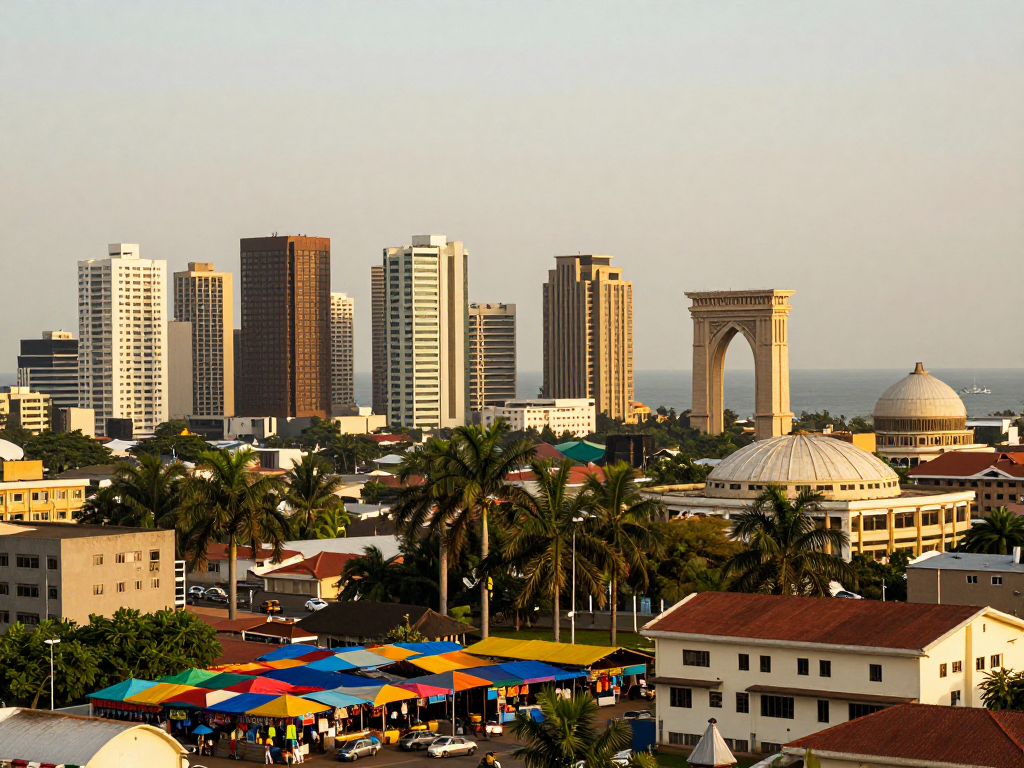
There is a particular quality to the light in Accra — golden, unhurried, spilling across the Gulf of Guinea like warm honey over the sprawling coastline. Ghana's capital is a city that refuses to sit still. From the colonial-era forts of Jamestown, where fishermen still haul their catches onto the same beaches that once witnessed the transatlantic slave trade, to the glass-and-steel towers of Airport City that announce a nation racing headlong into its future, Accra is a place of magnificent contradictions. The air carries the scent of grilled tilapia and kelewele from roadside vendors, the throb of highlife guitar riffs drifting from chop bars, and the low rumble of tro-tros navigating the cheerful chaos of Makola Market.
What makes Accra magnetic is not any single landmark but the irrepressible energy of the place — the way a city of five million manages to feel like a sprawling village where everyone knows your auntie. Osu's Oxford Street buzzes with boutiques, juice bars, and a nightlife scene that rivals anything on the continent. Black Star Square, that vast ceremonial plaza named for the lone star on Ghana's flag, stands as a monument to the independence movement that made Ghana the first sub-Saharan African nation to break free from colonial rule in 1957. And then there is Labadi Beach on a Saturday afternoon: drums, dancing, cold Star beer, and the Atlantic stretching endlessly toward the horizon. Accra doesn't ask you to love it. It simply makes it impossible not to.

Man's Cloth
El Anatsui
El Anatsui's *Man's Cloth* is one of the most celebrated works of contemporary African art — a shimmering, monumental tapestry woven not from thread but from thousands of flattened aluminum bottle caps and copper wire. Born in Ghana's Volta Region in 1944 and trained at the Kwame Nkrumah University of Science and Technology in Kumasi, Anatsui transforms the detritus of consumer culture into something transcendent: metallic draperies that ripple like kente cloth caught in a breeze. The work speaks to trade, colonialism, and the alchemy of transformation — how something discarded becomes luminous.
Anatsui's bottle-cap installations have hung on the facades of the Venice Biennale, the Royal Academy, and museums across the globe. Named to Time's 100 most influential people in 2023, he remains a towering figure whose work is inseparable from Accra's own story: a city built on trade, resilience, and the stubborn belief that beauty can be wrought from the most unlikely materials.
Jollof Rice
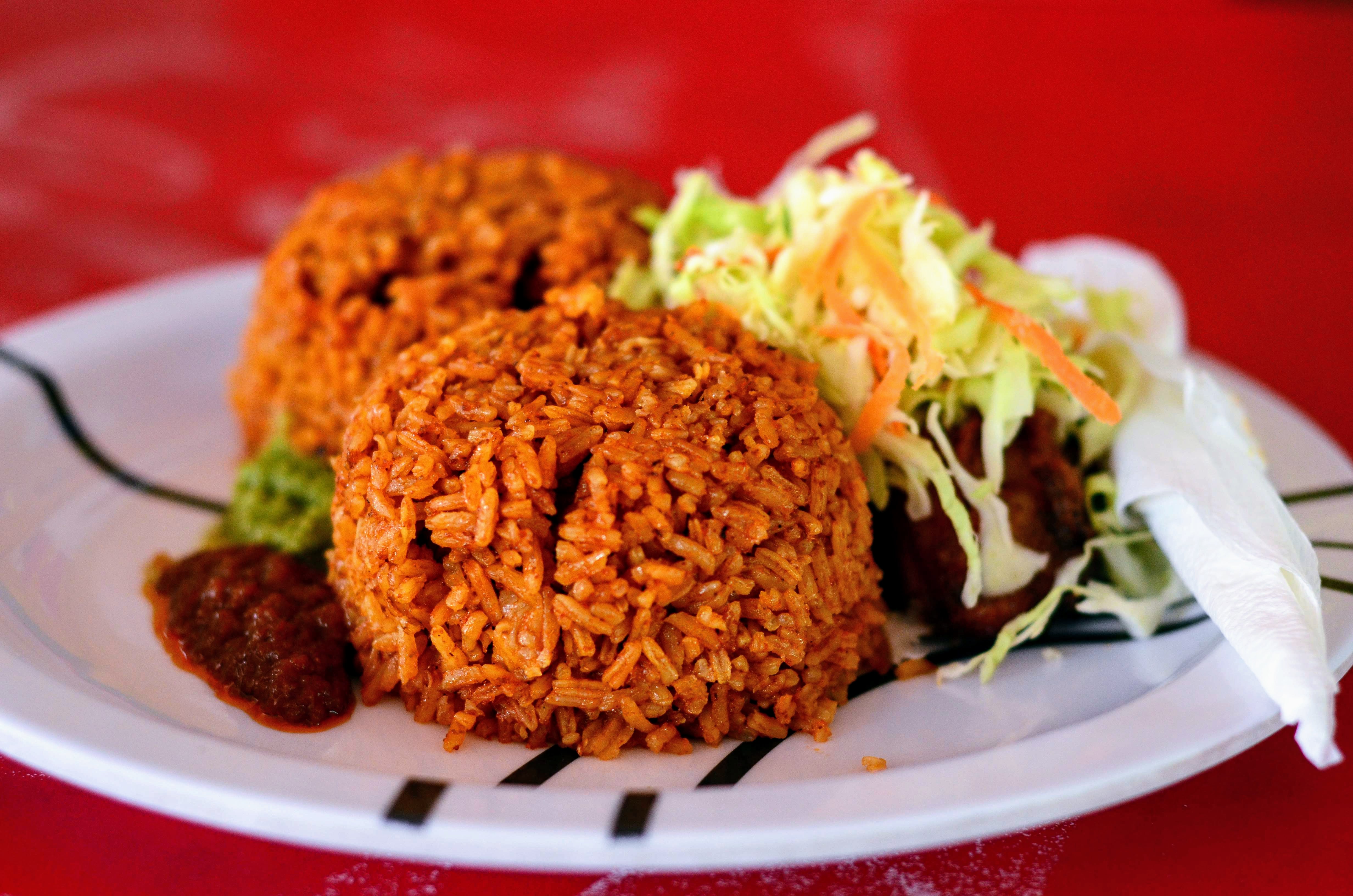
To understand West Africa, you must first understand jollof rice — and to mention it in Accra is to ignite a debate as passionate as any political argument. Ghanaian jollof is a one-pot masterwork: long-grain rice slow-cooked in a deeply spiced tomato sauce fragrant with onions, scotch bonnet peppers, and a proprietary blend of seasonings that every Ghanaian grandmother guards like state secrets. The rice develops a coveted smoky crust at the bottom of the pot — the *kanzo* — which locals fight over with the fervor of children after the last slice of birthday cake.
The so-called "Jollof Wars" between Ghana and Nigeria have become one of the internet's most enduring culinary rivalries, but ask any Accra local and the answer is settled: Ghanaian jollof, served alongside fried plantains, a crisp salad, and perhaps grilled chicken, is the definitive version. It appears at weddings, funerals, Sunday lunches, and roadside chop bars alike — the great equalizer of Ghanaian social life, proving that the best things in the world are cooked low and slow in a single pot.