A Day In Lübeck
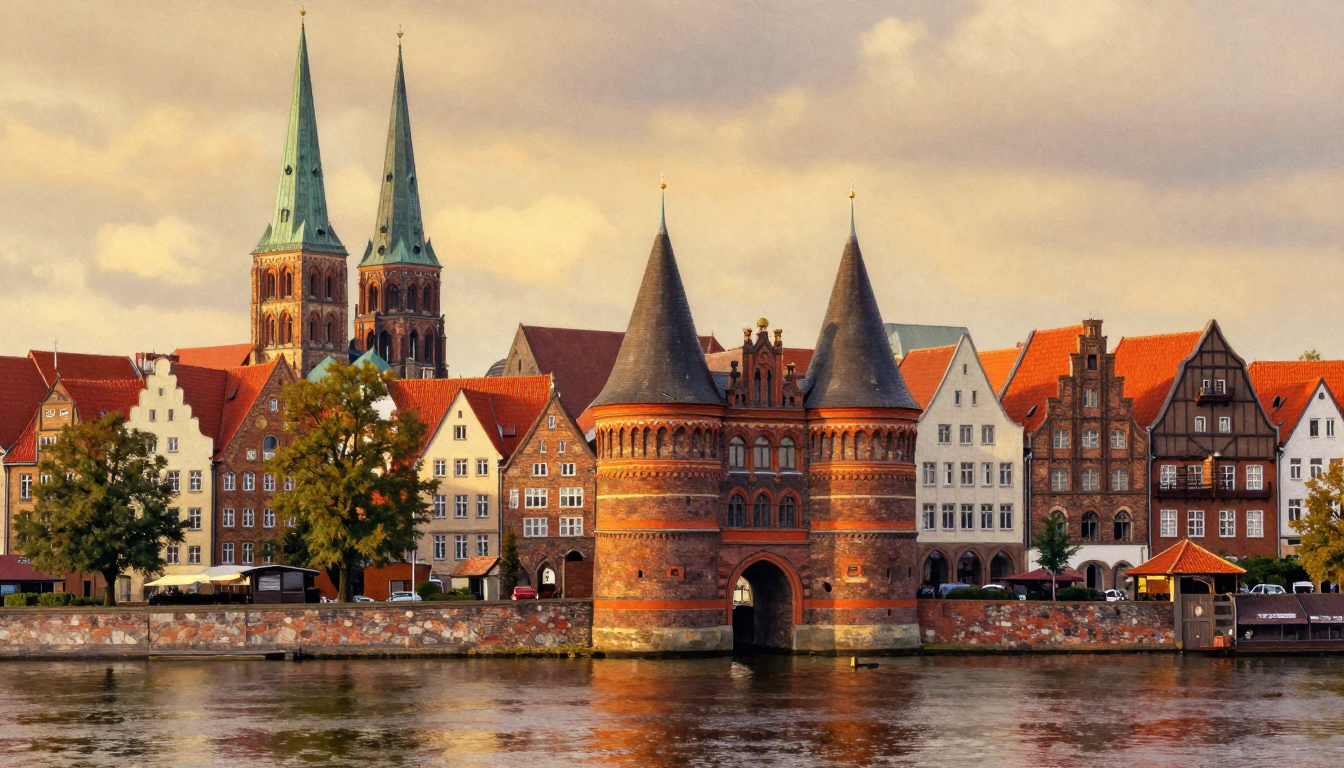
There are cities that whisper their grandeur, and then there is Lübeck — a place that announces itself in soaring brick and Baltic light. Once crowned the "Queen of the Hanseatic League," this northern German jewel sits on an island laced by the slow-moving Trave, its skyline a forest of seven Gothic spires rising from a medieval canvas of red-brick gabled houses, merchant quarters, and cobblestone passages that feel unchanged since the fourteenth century. In 1375, Emperor Charles IV named it one of the five "Glories of the Empire," alongside Venice, Rome, Pisa, and Florence — a distinction that still echoes in every corner of its UNESCO-listed old town.
To walk Lübeck is to move through centuries of power, art, and trade. The iconic Holstentor gate, leaning slightly with the weight of its 560 years, guards the western approach like a sentinel frozen in brick. Behind it unfold lanes that once hummed with the commerce of the known world — salt from Lüneburg, furs from Novgorod, cloth from Flanders. Thomas Mann was born here and set *Buddenbrooks* among its patrician houses. Dietrich Buxtehude filled St. Mary's Church with organ music so transcendent that a young Johann Sebastian Bach walked 400 kilometres just to hear him play. And then there is the marzipan — Lübeck's sweetest export, perfected here since the Middle Ages and still crafted by hand at Niederegger, where the scent of ground almonds drifts across the Marktplatz like a benediction.
Danse Macabre
Bernt Notke
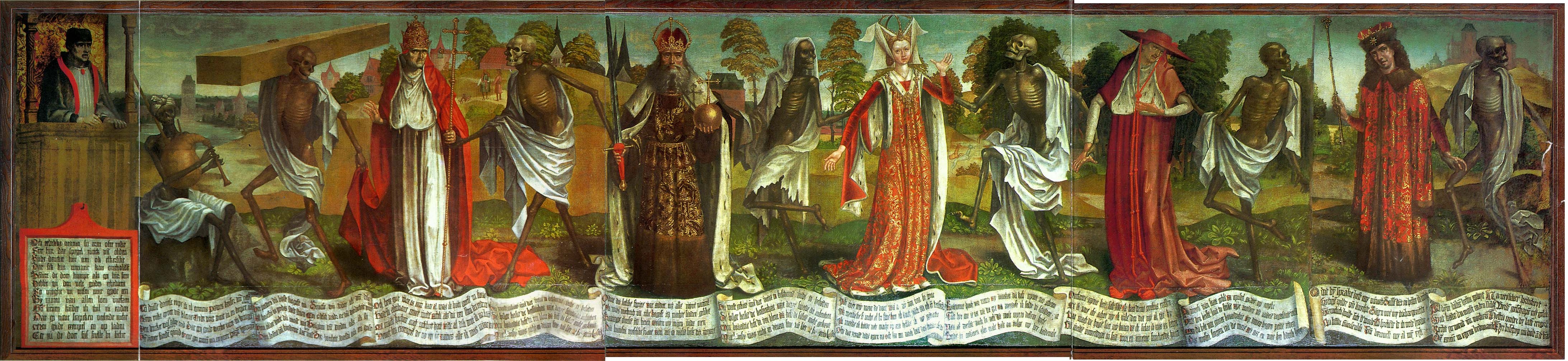
Bernt Notke's *Danse Macabre* is one of the most haunting medieval paintings ever created — a thirty-metre panorama of skeletal Death waltzing with the living, from pope to peasant, in a grim democracy of mortality. Originally painted for St. Mary's Church in Lübeck around 1463, the work was a memento mori of staggering scale and psychological intensity. The Lübeck original was destroyed in the Allied bombing of 1942, but a later version Notke created for St. Nicholas' Church in Tallinn survives as the only medieval Dance of Death on canvas still in existence.
Notke, who lived and worked in Lübeck for most of his life, was the foremost artist of the late Gothic Baltic world — sculptor, painter, and workshop master whose commissions spanned from Sweden to Estonia. His *Danse Macabre* captured something essential about Hanseatic culture: a mercantile society acutely aware that wealth could not buy passage past the final threshold. The surviving fragment in Tallinn, with its eerie parade of grinning skeletons and bewildered mortals, remains one of Europe's most powerful artistic meditations on the human condition.
Lübecker Marzipan
Lübecker Marzipan is not merely a confection — it is a protected geographical indication, a point of civic pride, and arguably the finest expression of ground almonds and sugar the world has ever known. The tradition dates to the Hanseatic era, when almonds arrived via Mediterranean trade routes and Lübeck's confectioners elevated the simple paste into an art form. What distinguishes Lübeck marzipan from all pretenders is its ratio: a minimum of two-thirds almonds to one-third sugar, yielding a dense, intensely nutty sweetness that bears little resemblance to the sugar-heavy imitations found elsewhere.
The undisputed temple of Lübecker Marzipan is Niederegger, founded in 1806 on the Breite Strasse and still standing opposite the medieval Town Hall. The café's upper floors house a marzipan museum; its display cases overflow with chocolate-coated loaves, fruit-shaped figurines, and seasonal creations that blur the line between confection and sculpture. Thomas Mann was a devoted customer. Today, Niederegger ships its wares worldwide, but there is something irreplaceable about tasting it here — steps from the Marienkirche, in the city that invented it.