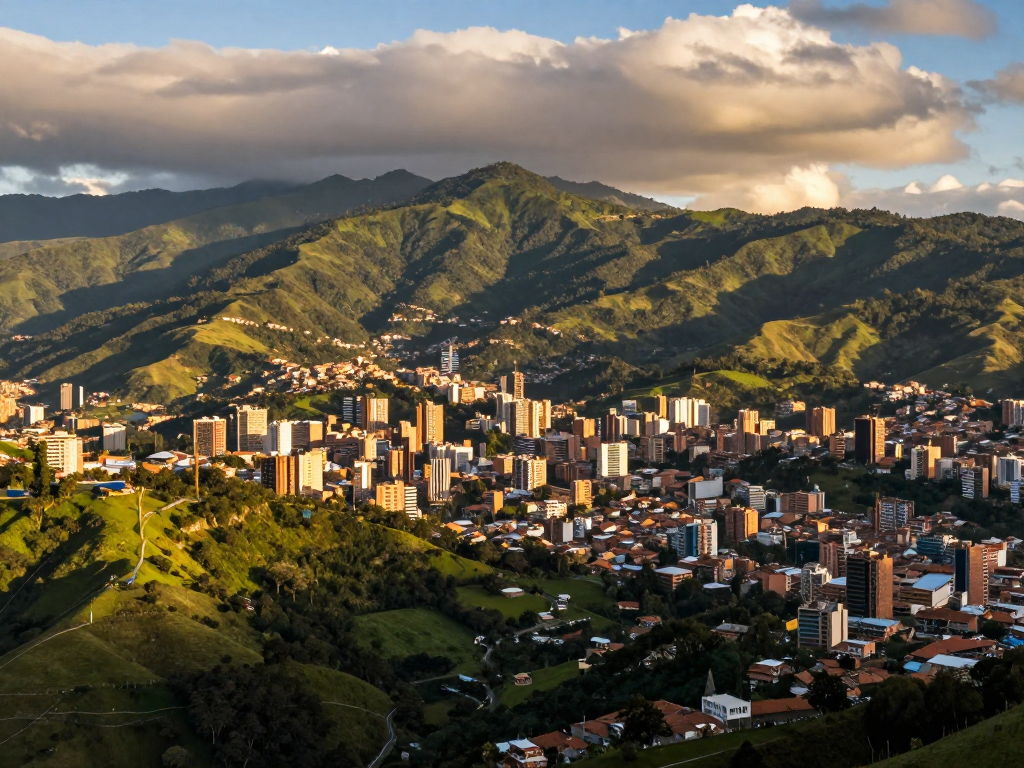
A Day In Medellín
Nestled in the lush embrace of the Aburrá Valley, Medellín is a city that defies every expectation. Known as the "City of Eternal Spring" for its impossibly temperate climate — hovering around a perfect 22°C year-round — Colombia's second-largest metropolis has undergone one of the most remarkable urban transformations in modern history. Where decades of turmoil once defined its narrative, today you'll find a city that pulses with innovation, creativity, and an almost infectious optimism. Cable cars soar over hillside barrios-turned-cultural-hubs, escalators climb through neighborhoods once considered unreachable, and the Medellín Metro — the only one in Colombia — stitches together a city that refuses to stand still.
But Medellín's magic isn't found in its infrastructure alone. It lives in the warmth of the paisas, the people of Antioquia, whose hospitality is legendary even by Colombian standards. It blooms in the annual Feria de las Flores, when the city erupts in cascades of orchids, roses, and silleteros carrying elaborate flower arrangements on their backs through the streets. It hums in the reggaeton beats drifting from Parque Lleras at midnight and in the quiet reverence of a tinto shared at dawn in a corner café. Medellín is a city that has looked its darkest chapters in the eye, chosen reinvention over resignation, and emerged as one of the most compelling destinations in the Americas.
From the panoramic views atop Cerro Nutibara to the cobblestone charm of Pueblito Paisa, from the world-class restaurants of El Poblado to the street art murals of Comuna 13, Medellín invites you not just to visit — but to fall completely, irreversibly under its spell.

Gato (Cat)
Fernando Botero
No artist is more synonymous with Medellín than Fernando Botero, the city's most beloved son, who passed away in 2023 at the age of 91. His signature style — voluptuous, exaggerated forms that seem to inflate their subjects with warmth and irreverence — has become one of the most recognizable visual languages in contemporary art. In the heart of downtown Medellín, Plaza Botero is an open-air gallery housing 23 of his monumental bronze sculptures, including the iconic *Gato*, a magnificently rotund cat that has become an unofficial mascot of the city.
Botero donated these works, along with his personal art collection, to the people of Medellín — a gesture of extraordinary generosity from a man who never forgot where he came from. Born in 1932 to a modest family, he studied the old masters in Madrid, Paris, and Florence before developing "Boterismo," a style that blends humor, political critique, and deep humanist empathy. Standing before *Gato* in Plaza Botero, surrounded by the constant flow of paisas and visitors alike, you feel the essential truth of Botero's art: that beauty, like Medellín itself, comes in forms you never quite expected.
Bandeja Paisa
If Medellín has an edible identity card, it is the bandeja paisa — a magnificent, unapologetic mountain of a meal that arrives on a platter the size of a small continent. This is the dish of the Paisa region, born from the appetites of arrieros (mule drivers) who needed caloric fortification for their journeys through the Andes. On one generous tray: red beans stewed with pork, fluffy white rice, seasoned ground beef, golden chicharrón crackling with salt and fat, a fried egg with its yolk still molten, sweet ripe plantain, smoky chorizo, a disc of arepa, a slice of creamy avocado, and a round of morcilla (blood sausage) for good measure.
It is not a meal for the timid. The bandeja paisa is a celebration of excess, a culinary declaration that more is more, and it reflects the warmth and abundance of Antioqueño culture. Every fonda (roadside restaurant) and every abuela's kitchen has its own version, each with subtle variations that spark passionate debate. Wash it down with a cold Club Colombia beer or a cup of mazamorra — a corn-based drink sweetened with panela — and you will understand why paisas consider this not just food, but a way of life.