A Day In Bruges
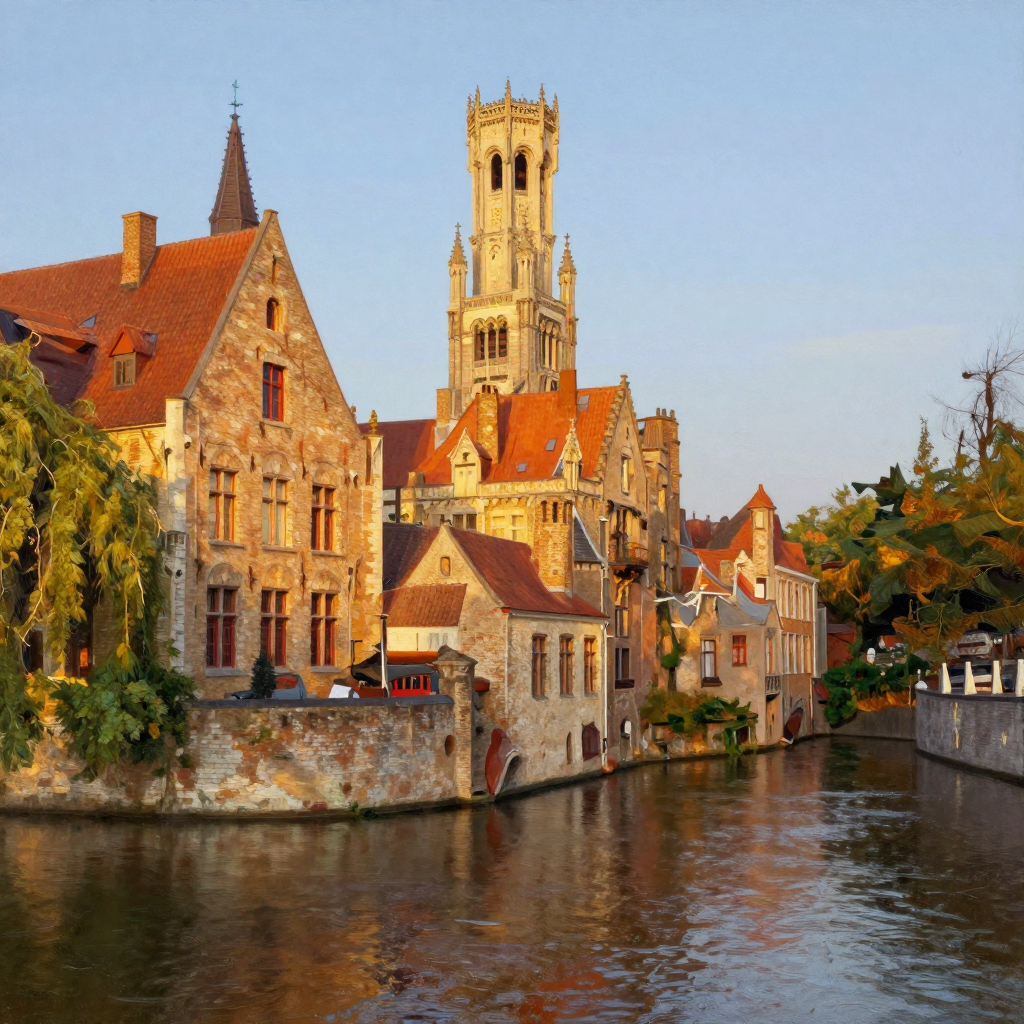
There are cities that age gracefully, and then there is Bruges — a place that seems to have simply decided, sometime around the fifteenth century, that it had reached perfection and needn't bother changing. The medieval center, a UNESCO World Heritage Site since 2000, is a labyrinth of cobblestone lanes threading between gabled townhouses and silent canals that mirror the sky with painterly precision. The Belfry looms over the Markt square like a stone sentinel, its 366 steps offering views across terracotta rooftops to the flat Flemish horizon beyond. Horse-drawn carriages clatter past chocolatiers and lace shops, but Bruges is no museum piece — beneath the postcard surface hums a city of university students, contemporary art at the Concertgebouw, and some of Belgium's most inventive kitchens.
Once the commercial capital of northern Europe, Bruges commanded a trading empire that stretched from the Hanseatic ports of the Baltic to the spice markets of Genoa. The world's first stock exchange opened here in 1309, and Flemish cloth merchants grew wealthy enough to commission the greatest painters of the age. When the Zwin inlet silted up around 1500, the golden era ended — but the economic decline preserved the medieval cityscape almost untouched, a frozen moment of Gothic splendor that travelers rediscovered in the nineteenth century and have never stopped visiting since. To walk along the Rozenhoedkaai at dusk, watching swans glide beneath the stone bridges, is to understand why they call it the Venice of the North — though Bruges, characteristically, would insist Venice is the Bruges of the South.
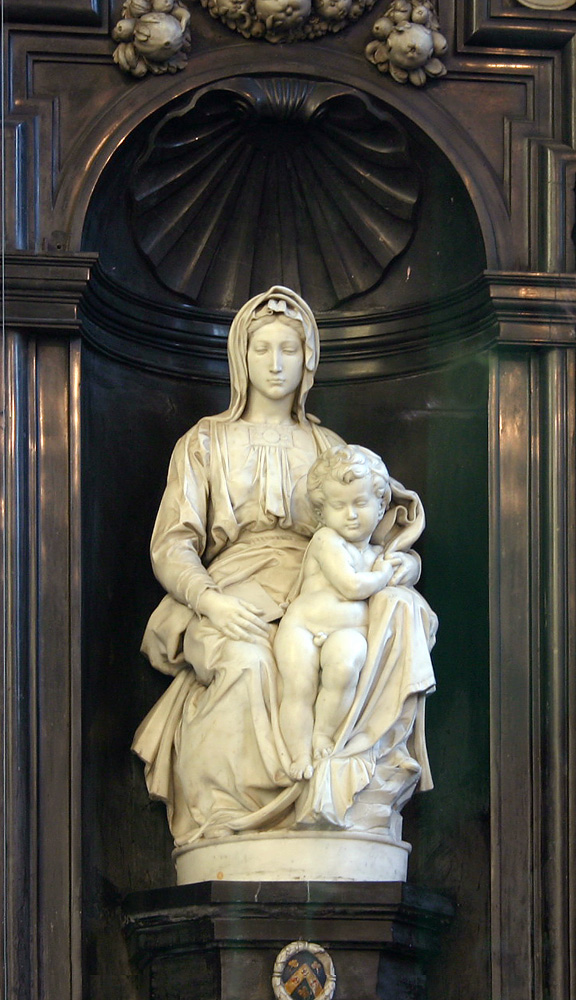
Madonna of Bruges
Michelangelo
Michelangelo's *Madonna of Bruges* — carved between 1501 and 1504 — is one of only a handful of the master's works to leave Italy during his lifetime. The marble sculpture broke radically with convention: rather than a serene Madonna cradling her infant, Mary gazes downward with quiet gravity while the Christ child stands almost independently at her knee, as though about to step into the world. Purchased by the Mouscron brothers, wealthy Flemish cloth merchants, for one hundred ducats, the work has called the Church of Our Lady in Bruges home for over five centuries.
Twice stolen — first by Napoleon's troops in 1794, then by retreating Nazi soldiers who smuggled it out of Belgium hidden in mattresses inside a Red Cross truck — the Madonna was both times recovered and returned. Its odyssey became part of the inspiration for the film *The Monuments Men*. Today it stands in a side chapel bathed in cool northern light, Michelangelo's quiet revolution in stone still arresting visitors who turn the corner and find themselves face to face with genius.
Waterzooi
Waterzooi is the dish that warms Flanders from the inside out — a luscious, cream-thickened stew that began as a humble fisherman's supper in nearby Ghent before conquering every hearth in the region. The name, from the Middle Dutch for "boiling water," belies its richness: a velvety base of egg yolk, cream, and vegetable broth cradles tender pieces of fish or chicken alongside carrots, leeks, celery, and potatoes. Charles V himself was said to be so enamored of waterzooi that he continued eating it even after his doctors warned his gout would worsen.
In Bruges, where canal-side restaurants ladle it out in deep earthenware bowls accompanied by crusty bread for sopping, the dish takes on a particular intimacy — the culinary equivalent of the city itself, deceptively simple on the surface but layered with centuries of refinement beneath. Purists insist on the original fish version, traditionally made with freshwater species like burbot, pike, or eel, though chicken waterzooi has become the more common incarnation across modern Belgian kitchens.