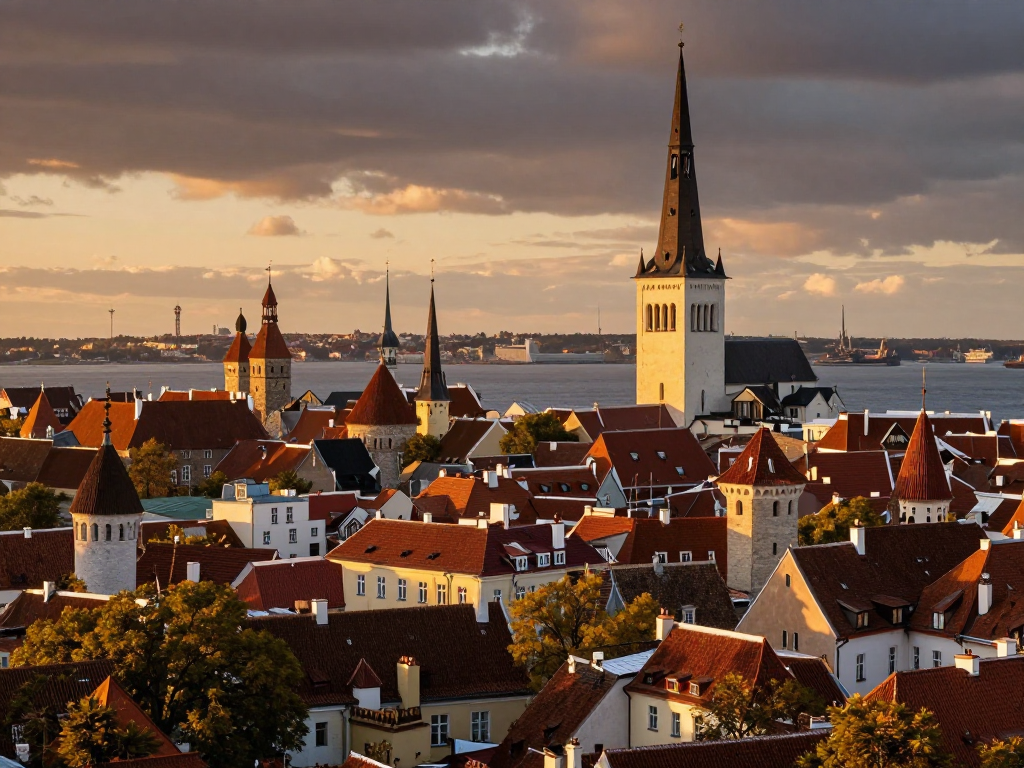
A Day In Tallinn
There is a particular quality of light in Tallinn that feels borrowed from another century. The Estonian capital rises from the shores of the Baltic Sea like a medieval illuminated manuscript come to life — all limestone walls, red-tiled rooftops, and Gothic spires piercing a sky that shifts between pearl grey and the palest Nordic blue. The Old Town, a UNESCO World Heritage Site since 1997, is one of the best-preserved medieval cities in Europe, its cobblestone lanes still tracing the footpaths of Hanseatic merchants who made this port city a crossroads of Northern European trade.
But Tallinn is no museum piece frozen in amber. Walk beyond the ancient city walls and you'll find Telliskivi Creative City, a former industrial complex transformed into a thriving hub of galleries, design studios, and craft breweries. The Rotermann Quarter gleams with contemporary architecture that dares to converse with its medieval neighbors. Estonia's reputation as a digital society — the country that gave the world Skype and pioneered e-residency — pulses through the city like a second heartbeat, making Tallinn that rarest of destinations: a place where the 13th century and the 21st coexist not just peacefully, but thrillingly.
The sensory pleasures are quieter here than in southern Europe, but no less profound. There's the scent of roasted almonds drifting across Town Hall Square in winter, the haunting silence of St. Nicholas' Church, the way the late afternoon sun turns the Alexander Nevsky Cathedral's onion domes to molten gold. Tallinn asks you to slow down, to notice, to let centuries of accumulated beauty reveal themselves at their own unhurried pace.

Danse Macabre
Bernt Notke
Housed in the Niguliste Museum within St. Nicholas' Church, Bernt Notke's late 15th-century *Danse Macabre* is Estonia's most celebrated medieval artwork and the only surviving Dance of Death painted on canvas in the world. The fragment — what remains of an original work stretching some thirty meters — depicts skeletal figures of Death leading a procession of mortals from pope to peasant, each grasping hand in a grim and democratic dance. The Low German verses woven through the composition deliver an unflinching memento mori: before Death, all earthly rank dissolves.
The painting's survival is itself remarkable. Having endured centuries of war and upheaval in this contested Baltic city, the fragment that remains radiates an almost electric power — the figures caught mid-step, their expressions hovering between bewilderment and resignation. Standing before it in the cool, vaulted nave of St. Nicholas', you feel the full weight of medieval Tallinn pressing in around you: the same stones, the same shadows, the same unanswerable question posed in pigment five hundred years ago.
Verivorst (Blood Sausage)
No food is more deeply woven into Estonian winter traditions than *verivorst* — blood sausage, served darkly gleaming alongside sauerkraut, lingonberry jam, and roasted potatoes. Made from pork blood, barley groats, onions, and marjoram stuffed into natural casings, verivorst reaches its cultural zenith during the Christmas season, when it appears on virtually every Estonian table. The combination is ancient and elemental: the iron-rich, faintly sweet sausage cut by the bright acidity of lingonberry, the earthy warmth of grain.
In Tallinn's Old Town restaurants, verivorst has been elevated from rustic farmhouse fare to something approaching art — sliced and pan-crisped, served with seasonal root vegetables and mustard. But its soul remains resolutely humble, a taste that connects modern Estonians to centuries of Baltic winters endured and celebrated around laden tables.